
Post-editing
What are the benefits of post-editing?
Post-editing merges the speed of machine processing with expert human insight, delivering optimal results in a shorter timeframe.
When should you choose post-editing?
Post-editing works well for standard text translations. For technical document translations, post-editing ensures the quality you need. When your top priority is cost.
Post-editing vs. professional translation
The main advantage of post-editing lies in its attractive pricing. Below is an approximate comparison of costs between qualified translator services and post-editing.
Call us: +370 650 51544
or write an email info@airv.lt to find the best decisions together!
What tools are used for machine translation?
Currently, the most advanced machine translation tools include:
- Google Neural Machine Translation (GNMT)
- DeepL
- SDL Language Cloud
- Amazon Translate
- Microsoft Translator
Today’s most advanced machine translation tools provide fast and reliable translations, which are subsequently reviewed and refined by skilled linguists to ensure top-quality results.
What is post-editing?
Post-editing (often abbreviated as MTPE, or Machine Translation Post-Editing) is a hybrid service where content is first translated using advanced machine tools like Google Translate, DeepL, or SDL Language Cloud, then refined by a professional translator. When an experienced linguist reviews machine-translated content, it can reach the same high standards of quality, professionalism, and accuracy as human translation.
Why choose AIRV’s post-editing services?
Cost-effectiveness. Post-editing costs up to 50% less than traditional translations while still delivering high-quality outcomes.
Speed. The post-editing option allows you to receive translations for high-volume texts in a significantly shorter timeframe. Our professional translators guarantee quality results.
Experience. With years of experience in translating technical and legal documents, we ensure that post-editing not only saves you time but also offers the perfect balance for those seeking to combine cost-efficiency with quality.
What are the benefits of post-editing?
– Speed and efficiency. Machine translation can handle large volumes of text within minutes, making post-editing ideal for urgent projects.
– Pricing. Compared to traditional translations by human translators, post-editing can be a more cost-effective choice. Post-editing is often 30–50% more affordable than traditional translation, as it requires less time and reduced human input.
– Quality. Expert editors polish the machine output, correcting spelling, style, and terminology to ensure that the final text meets high standards.

Light post-editing
With light post-editing, text translated by automated software is revised for clarity and grammatical correctness. This option is ideal for quickly translating in-house company documents or high-volume texts when accuracy, perfect nuance and stylistic polish aren’t critical. However, it’s essential to note that light post-editing may not guarantee precise terminology and style alignment. The translation will be fairly accurate but may lack the smoothness that a professional translator would provide.

Light post-editing is often used:
– For texts intended for in-house company communication;
– When speed is a priority, and basic readability suffices (terminology and style are secondary).
This service is both cost-effective and quick as only fundamental errors are corrected, and is therefore cheaper and faster than full post-editing.

Full post-editing
Full post-editing is a comprehensive process that ensures translations are grammatically, stylistically, and terminologically accurate. With full post-editing, machine-translated text is refined to match the quality of a skilled translator’s work; editors correct spelling, terminology, and overall fluency. Post-editing option is suitable for complex technical or legal documents where precision is essential.
Full post-editing is typically chosen for:
– Technical or legal documents, instructions
– Critical company content intended for public image and publication

When should you choose post-editing?
– Post-editing works well for standard text translations. If your content isn’t highly specialised or culturally specific, post-editing provides an efficient and effective solution;
– For technical document translations, post-editing ensures the quality you need. If your project involves product descriptions, instructions, or other technical documents that are well-suited for machine translation, this service delivers the required standard.
– When your top priority is cost. If you are working within a limited budget but still want to maintain quality, post-editing offers an excellent solution.

Post-editing vs. professional translation
– Professional translation: €0.05–0.15 per word.
– Post-editing: €0.025–0.10 per word.
The exact cost varies depending on the source and target languages, as well as the complexity of the text, but on average, post-editing is 30–50% less expensive than translations by professional translators.
When to choose professional translation without AI?
While both light and full post-editing leverage machine translation, there are situations when relying solely on qualified translators – without AI – is the best choice. This approach is ideal when top-notch quality, term precision, stylistic consistency, and localisation – adapting the text to a different linguistic and cultural environment – are paramount. For documents that play a crucial role in a company’s image or involve complex content (such as medical, legal, or marketing materials), expert translation ensures impeccable results, preventing potential misinterpretation of the original meaning by machine translation.
To learn more about our light and full post-editing services or our professional human translation offerings, contact the AIRV project management team. We’ll promptly discuss your needs and help you choose the best solution for your project. Let us empower your business to thrive in international markets!
Try our post-editing services today!
Are you an industry innovator looking to optimise costs while swiftly obtaining large-scale translations? Then AIRV’s post-editing service is precisely what you need.
Contact our experienced project management team, and we’ll provide you with a tailored solution. You can opt for advanced machine translation reviewed by our expert translators – striking the ideal balance of price, speed, and quality – saving up to 50% on your translation budget. Alternatively, choose premium, high-quality translations executed exclusively by professional translators.
Learn more about our post-editing service and request a quote:
Order
Henkel Balti OÜ
AIRV has been our trusted partner for several years. They`re always taking their job seriously and can handle even with tight deadlines. I`ve always been satisfied with the quality of their work as they`ve taken over our specific expressions and using them correctly. In addition to that the communication has always been pleasant, friendly and fast. I know that I can rely on them in every situation.
TCL Communication
We’ve been working with AirV for years and we really appreciate the excellent service that AirV provides.
They have professional and experienced translators who are proficient in using translation tools, and always deliver good translation quality on time, even for big tasks in urgent cases.
They also have excellent project managers who stay in close touch with us to understand our requirements and expectations very well.
We hope keep cooperation with AirV in the future.
UAB Plastic formo
A friendly and professional team. They have never failed to meet the deadline and always take the client’s needs into consideration. The problems, which are very rare, are always sold to the client's benefit. It was a big pleasure to work with this company for many years.

UAB Topsonic
Thank you so much. We have been pleasantly surprised by the highest level of proofreading. We found your proofreader’s comments very useful.
As always, AIRV is dedicated to quality and customer satisfaction.
Telko Lietuva UAB
We have been working with the translation agency AIRV for over 10 years and we can definitely recommend this agency to everybody as a supplier of top quality services for a reasonable price.
We highly appreciate for the orders delivered on time and very often before the agreed upon deadline. Moreover, their quality is excellent in addition to a friendly and attentive staff. We can always rely on this company in every aspect - from quality to meeting the deadlines.

ZETA LAW Professional Partnership of Lawyers
We have been using the services of the translation agency AIRV on a regular basis and we have been very satisfied with their cutting-edge services. As matter of fact, our deadlines are always pressing, but the AIRV team has always risen to the challenge and they have never disappointed us. They are enthusiastic and ready to help whenever it is required. Their prices are extremely competitive, nevertheless, the quality level of their translations is exceptionally high. We strongly recommend this translation agency and we look forward to working with AIRV in the future.
Good luck to the AIRV team!
UAB „Kauno tiltai“
We can always rely on your translation agency. We are using your translation services on a continuous basis and we have only positive words to say about the translation process at every step: ordering, processing, reporting about the progress of work, through to final delivery. As a translation agency you are absolute professionals in this field. Our wish is that you will maintain the same quality of work in the future as well. Good luck!

Kauno Pienas, a branch of AB Pieno Žvaigždės
We have only positive words to say about the quality of your work and our working relationship in general. All the translations you do for us are accomplished within the agreed deadlines despite the fact that very often our orders have very short deadlines and they have to be made within a very short period. Prior to final delivery, we always cross-check the translations and this allows us to ensure that correct and consistent terminology specific to our industry field has been used. Moreover, it is convenient for us to have all the translations in Word. We hope that our future cooperation will be just as successful.

UAB EMP Recycling
We wish to say many thanks to the translation agency AIRV for highly professional, prompt and exclusive work. We highly appreciate the AIRV staff as a reliable partner whose efforts were a valuable input into the success of EMP Recycling projects.

UAB AVIABALTIKA
We are always satisfied with your translations. We have been cooperating for more than ten years and really hope that our cooperation will continue for many years. We wish you and your staff all the best!
AB Sanitas
We highly appreciate the efforts of UAB AIRV. We have been working together for three years. They have been translating huge projects for us and sometimes, it was hard to believe that they would manage to accomplish all the tasks in time. They have NEVER failed to meet the deadline!

UAB Aconitum
We are always satisfied with your translations. We are happy about their turnover time and quality. We wish you a big success!

UAB Olansija
Language is involved in everything what we do. One thing is to speak foreign language, but the entirely different thing is to work with the foreign language. We are really demanding about the translation quality, text editing and language style. Therefore, we have been frequently using the services of UAB AIRV for three consecutive years.
They give an opportunity to deliver and receive the materials via e-mail and this is very important today as a time-saving measure. The staff of UAB AIRV Klaipėda branch responds immediately and we can always rely on them. The staff of UAB Olansija wishes a big success in future business of the company.

UAB Hegelman Transporte
We can say only positive words about your translation agency in return for excellent quality of translations, strict following of the deadlines and high level of services. The staff is always friendly and attentive. All the translations are accomplished within the shortest possible time limits and this enables us to optimize our working time.
Thank you for being with us!

Lithuanian Cable Television Association
Thank you for cooperation. Our enquiries are always followed by immediate responses to every issue, which is important for us. Moreover, the translations are always accomplished very quickly and in a qualitative manner. We wish you a big success in your future business and hope that you will continue working in a professional way.

UAB Kaefer Termoizola
We, at UAB Kaefer Termoizola, can say only positive words about the translation agency AIRV. The service level is really high and we can always be sure that we can rely on them in the most urgent cases. They are always ready and willing to do their best! Many thanks! P.S. Highest level of services and attention to the clients’ needs!

UAB „PLIUS“
The translation agency AIRV is a reliable partner whose high level of professionalism and competences helped us to better understand the peculiarities of our company’s operations and enabled us to find the most optimum solutions. We are always sure that the tasks will be accomplished in time and this allows us to achieve the desired results. Excellent quality of AIRV services complies with the strictest requirements, which we apply to our own services and solutions.

UAB Schiedel kaminų sistemos
Thank you for the quality translations and we are really satisfied with your services! We hope for our future successful cooperation!
 Ensuring translation excellence: Is it possible to ensure translation quality without an editor?
As the demand for translation services continues to rise, the need for top-notch quality becomes paramount – it's...
More Translation of aviation texts - the forte of AIRV's expertise
While AIRV may not directly operate in aviation, our passion for this field is very close to our heart. Clients often ...
More From client’s perspective: finding the perfect price/quality balance
Clients often face a dilemma when seeking translation services: should they prioritise saving money or invest more in ...
More Why invest in quality translations?
The importance of investing in quality translations cannot be overstated for companies aiming to succeed in internatio...
More Translation speed or quality? AIRV has mastered the art of delivering both
Businesses operating in international markets rely heavily on translations for various purposes such as contracts, reg...
More Translation agency's most significant indicator of performance is the returning clients
What makes an ideal customer? We believe that the ideal customer is someone who chooses to return to us. At AIRV, we b...
More What is special about technical translations? Insights from professionals
Today, no international business can do without translation services. Unique aspects of translating technical texts ar...
More Customers speak: What makes AIRV a reliable choice for legal text translations?
Our extensive experience in this field has demonstrated that not all translators possess the necessary expertise to ta...
More How can such translations help protect your reputation and save you money?
As globalisation continues to blur the lines between countries and cultures, it has become easier for goods and servic...
More Language localisation is an investment that pays off
Studies* show that 76% of online shoppers prefer shopping on websites that contain information in their native languag...
More
Positive feedback from partners attracts new clients
One of the core principles of the AIRV translation agency is friendly customer interactions, embodied in our long-stan...
More What are the ingredients for a good translation? Specialists answer
When it comes to ordering a service for the first time, it's difficult to be assured of a successful outcome. The...
More Customers want speed and quality when they hire translators
Today, time is a very valuable and important resource, thus the ability to respond swiftly to requests and adhere to t...
More This year we celebrate our 26th anniversary and invite you to take a closer look at the history of our translation agency!
26th anniversary of AirV: How it all began. Translations from and into various languages of the world are quite co...
More Reliable translation partners for your business: how to find them?
Reliable translation partners for your business: how to find them? With increasingly more businesses going global, th...
More
Merry Christmas
For some, this year has been a year of great discoveries and growth; for others – the year of losses or shocks, but ev...
More Our working hours are as usual
Covid-19 and requirements and bans of lockdown affect the lives of everyone, nevertheless, life DOES NOT STOP. We are ...
More Attention!
Dear clients and partners, it is true that we have long been calling for switching to electronic documents, where poss...
More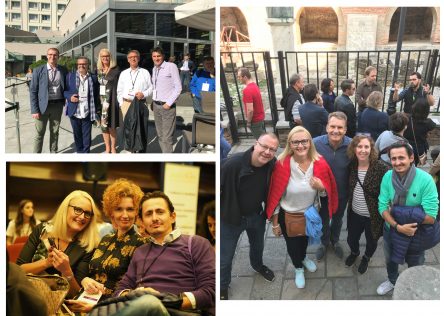 A conference for European language service providers: ELIA Networking Days in Bucharest!
The AIRV translation agency, based in Lithuania and boasting more than 20 years of experience, is a current member of ...
More The AIRV Translation Agency has joined the largest European Language Association
We are proud to announce that the AIRV translation agency has joined the largest European Language Association. The ra...
More Association of Lithuanian Translation Companies holds the 5th annual conference „Grow your business. Grow your team“
Traditionally, on the 28th of October, the Association of Lithuanian Translation Companies holds the 5th annual confer...
More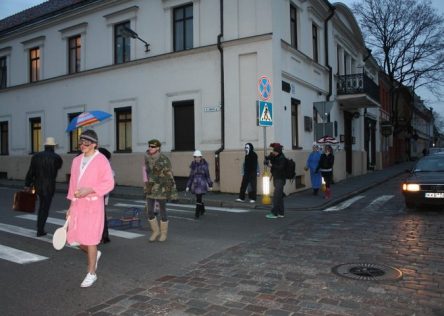 International Day of Tolerance
On November 16, the Translation Agency “AIRV” and the Radio Station “Extra FM” organized the public event “March acros...
More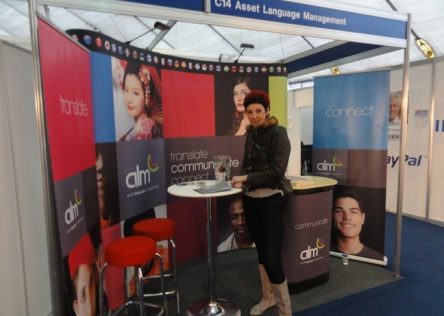 Impressions from the UK biggest business show Business 2012 in London
Translation agency AIRV is a fast growing and innovations oriented company. To keep abreast with constantly changing b...
More AIRV Management Team visiting the International Franchise Exchibition in London
Moments from the International Franchise Show 2012 in London.
More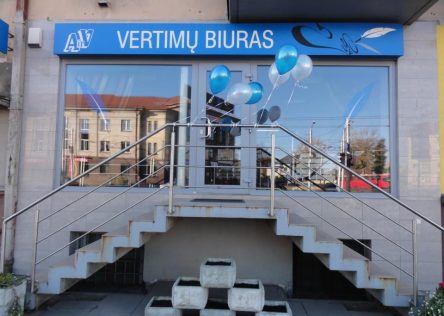 AIRV 15th anniversary
15th anniversary of the translation agency AIRV. Nice moments from Vilnius, Kaunas and Klaipeda branches.
More Let's make Kaunas more colorful
Let’s make Kaunas more colorful! A cheery event at the commercial centre “Savas”. On 4th December the commercial cen...
MoreSubmit a request
F.A.Q.
How the cost of translation is calculated?
The pricing model is based on the number of symbols. One standard translation page consists of 1,500 symbols excluding spaces. Different rates apply to different language combinations and for this reason, call or email to the translation agency and ask for more specific price. You should specify a) a language combination; b) a required translation service.
Is it possible to order translation services remotely?
Yes. If you need a notarized document, you can deliver your documents or texts by email and the translation agency shall take care of everything–they shall provide you with an electronic version of the translation validated by the agency.
Are urgent translation tasks charged extra?
No. We take every step to complete the translation as soon as possible and deliver it to a customer and therefore, we do not apply additional charges.
Are interpreting (consecutive and simultaneous) services offered?
Yes. Highly professional interpreters provide this service. Interpreters are selected subject to the field of specialisation, e.g. interpreting during events, conferences, commercial negotiations etc.
Is it possible to complete paperwork in Lithuania, if a customer is abroad?
Definitely yes. The translation agency helps the customers abroad very often: they can rely on us when they need translation, notarisation or legalisation services. You can email us the documents you need to be translated, or, alternatively, you can choose courier or prepaid post services. The documents will be prepared in line with your requirements.
Is it possible to order translation of sound and video records?
Yes. We offer the translation of more than 30 sound recording formats, including AIFF, M4A, MP3, MP4, WAV and WMA. We can also work with YouTube and other resources.
What translation fields we handle?
We have professional translators working in such fields as medicine, finance, engineering, law, advertising as well as creative translations.
Are online translations time-saving?
As usual, our response time is very short. Whether you decide to order translations online or to visit our physical offices, we shall do everything for you as soon as possible.
What makes the translation cost-effective?
We use the latest translation technologies and software. They can recognise repetition and thus save your money. This is not an automated translation but rather translation tools that allow to maintain the original formatting of the translated text. If any text was translated before, the tool will offer the repeated segments of the text automatically. In this way, the translation process is shorter, cheaper and of better quality.
Where exactly the translation office in Vilnius is?
Our translation office in Vilnius is at Raugyklos g. 4A, LT-01139. The easiest way to find it is by walking or driving along Raugyklos Street from the Margutis sculpture towards V. Šopeno Street. You can park your car on the street in front of the office (there is a yellow zone nearby). You will easily spot the office signboard. You are welcome to drop by.
Digital certification of translations – is it a free service?
With the rapid changes in living conditions during the global COVID-19 pandemic, the popularity of eco friendly translation, a service that has been on the market for a number of years, has grown significantly. This means that we will digitally certify the translations of the documents for which you do not need a hard copy, free of charge, using our office stamps, making the process completely paperless. Let's protect our planet and print responsibly.